
LearnClash vs Trivia Crack: Quiz Apps Compared [2026]
LearnClash vs Trivia Crack: compare ELO duels, spaced repetition, AI quizzes, solo play, ads and the real Premium-versus-Prime split.

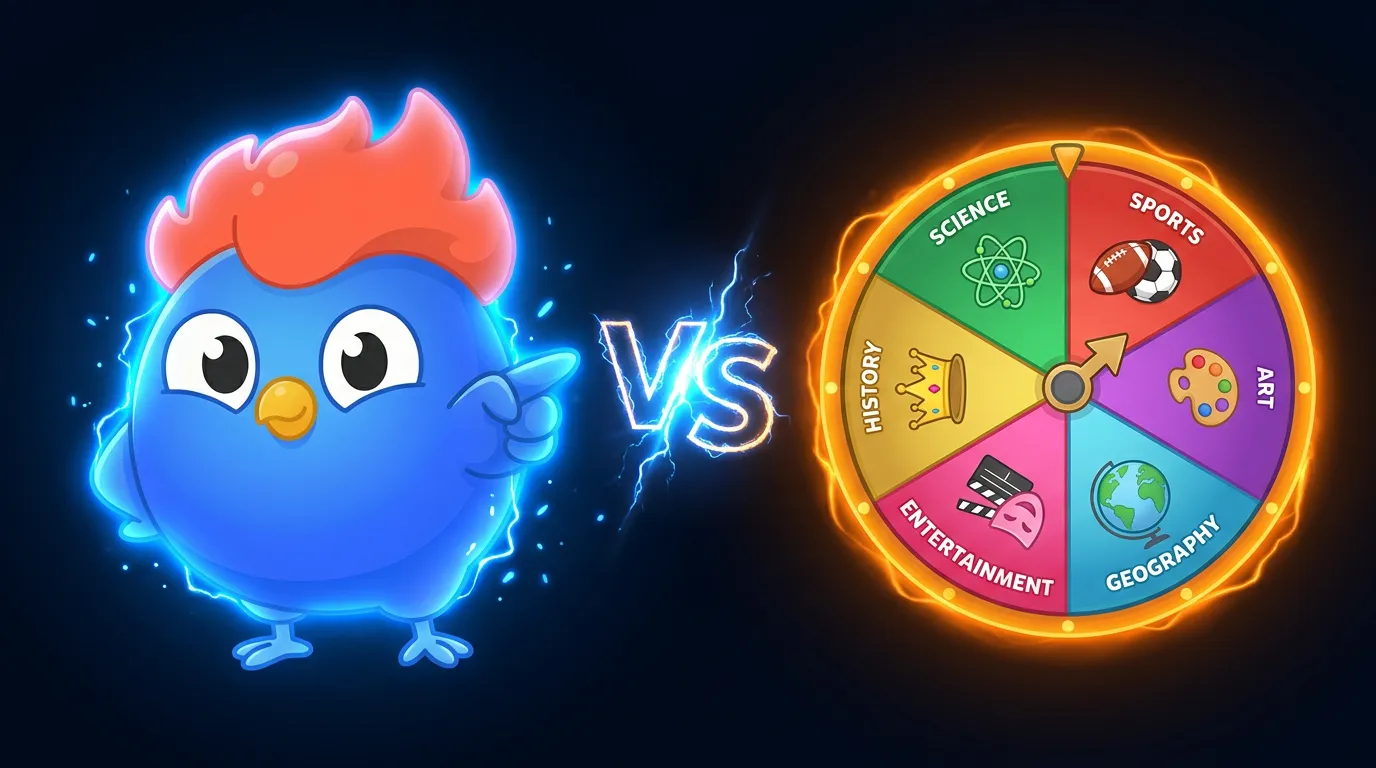
Trivia Crack still has the wheel you remember. But if you have not opened it in years, its AI-made quizzes, themed Episodes and solo play may surprise you, because the six categories on that wheel no longer describe all the things you can do.
LearnClash builds its quiz duels around ELO rank and spaced repetition. The useful choice is how you want to play and revisit what you learn. Custom topics alone no longer separate the two apps.
I make LearnClash, so this is a founder’s comparison. I rechecked the US iOS listings and Etermax’s help pages on September 11, 2026, against LearnClash’s released features. This review uses sources. I did not run a new hands-on test of Trivia Crack, so when its own help page describes a tool or a plan, I label that as a documented feature and leave any untested limit or missing detail open. Prices below are US dollars. You can try a LearnClash round before deciding.
LearnClash vs Trivia Crack at a Glance
Both apps let you answer questions with friends and play on your own. LearnClash puts its review cycle and ELO ladder at the center. Trivia Crack combines Classic play with themed modes and quiz creation. This table separates those documented features from things this review could not verify.
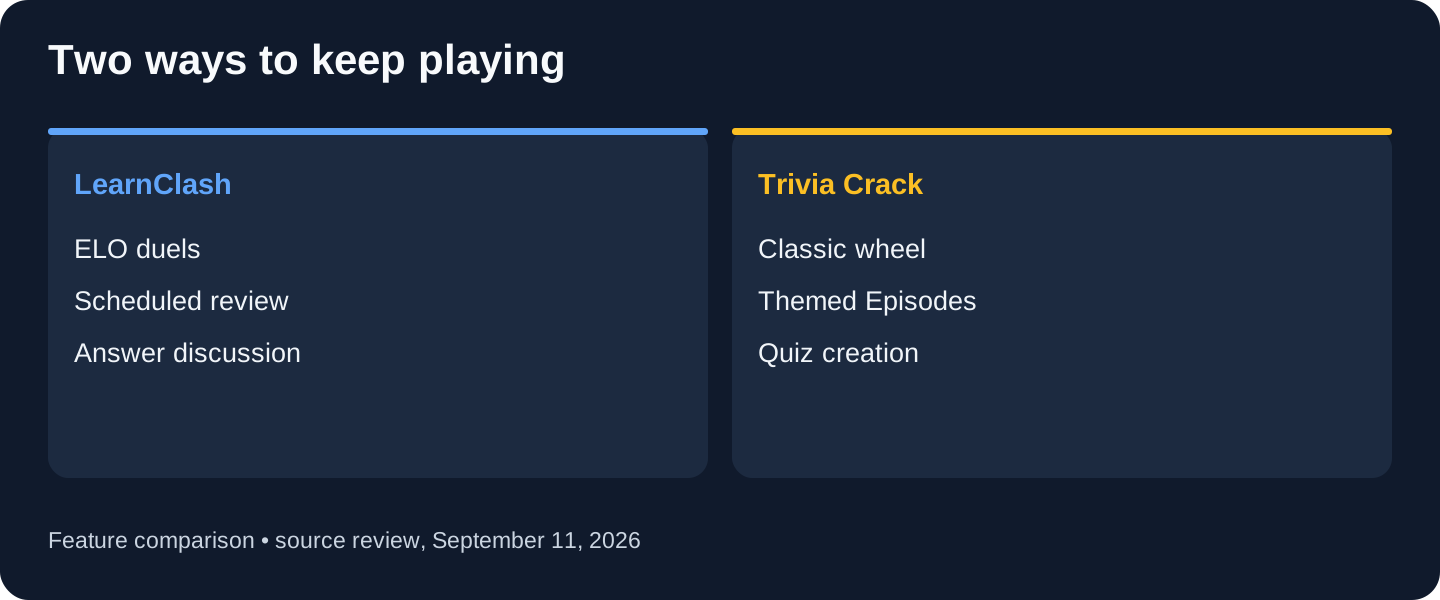
| Feature | LearnClash | Trivia Crack |
|---|---|---|
| Topics | Search a topic for duels or Solo | Six Classic categories, plus themed Topics and Episodes |
| Question creation | AI generation with automated checks | Player-created quizzes, including AI tools |
| Multiplayer | 18-question duels; ordinary turns or an agreed live session | Classic wheel matches and other quiz modes |
| Ranking | Eight ELO tiers, Iron to Phoenix | Classic crowns plus weekly and category rankings |
| Scheduled review | Learning, Known and Mastered stages | Comparable schedule not documented in reviewed sources |
| Solo play | Short review sessions, including weak spots | Solo play described in both US iOS listings |
| Daily activity | Quests, streaks and friend quests | Streaks and daily missions are documented |
| AI help | Clash Chat for answer and topic discussion | Quiz creation; an equivalent in-game answer tutor was not verified |
| Ads | None on either tier | Free app has ads; paid options differ |
| Paid option | $7.99/month or $59.99/year | Separate Premium app: $6.99 on US iOS; Prime subscription also offered |
The free listing and Premium listing both describe AI creation. A listing is not proof that every tool is free for every account. Current access and prices can vary by region or offer, so check your own screen before paying.
Questions: Any Topic, Any Difficulty
LearnClash lets you search for a subject such as Renaissance art, cooking or Australian wildlife. You choose from easy, medium and hard questions, and while each generated item passes automated checks before use, a bad fact or a fuzzy answer can still slip through and spoil what would otherwise be a good round. Report it.
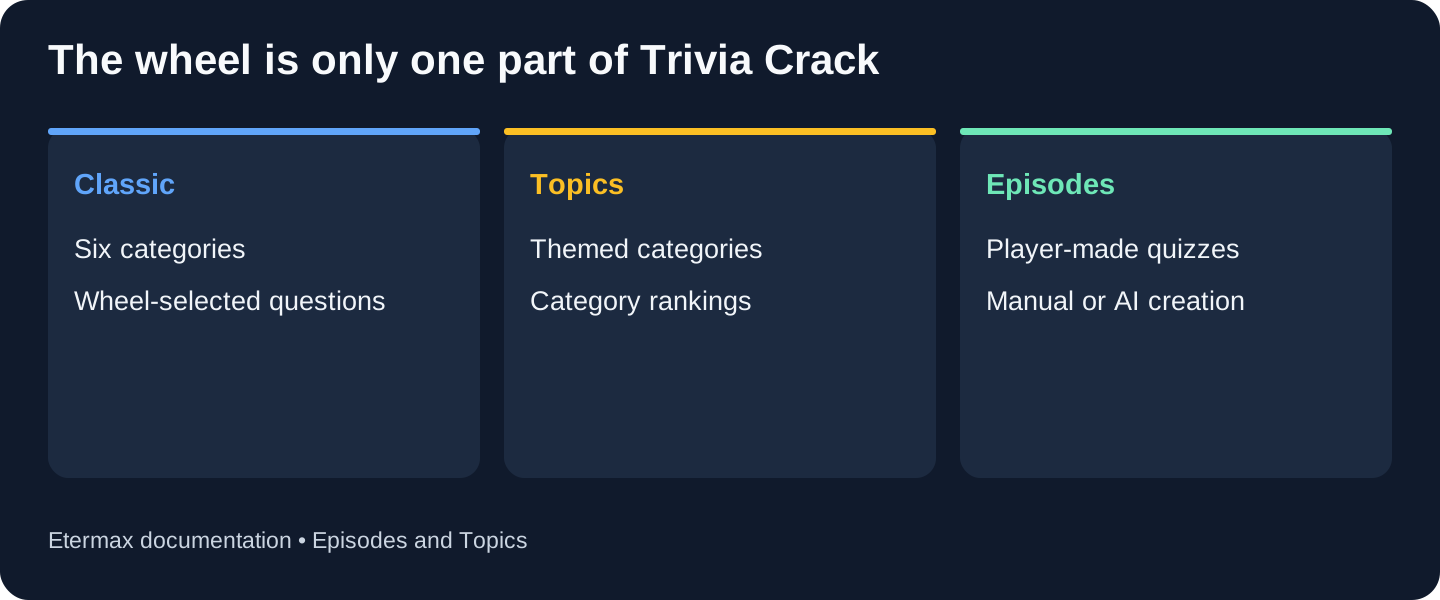
Trivia Crack also reaches beyond its wheel. Its Episodes guide describes themed quizzes made by players, with questions written by hand or generated with AI. That changes the topic comparison: niche interests are not exclusive to LearnClash.
| Question choice | LearnClash | Trivia Crack |
|---|---|---|
| Starting point | Search a topic and play | Classic categories, themed play or an Episode |
| Creation | AI-generated items with checks | Manual or AI-assisted Episode creation |
| Difficulty | Easy, medium and hard | A matching three-level system was not verified |
| Revisiting questions | Integrated review cycle | A matching scheduled-review cycle was not verified |
The practical difference is the next step after finding a topic. LearnClash connects that subject to duels, your collection and later review. Episodes lets a Trivia Crack creator build a quiz for other people to play. If writing and sharing your own question set is the main goal, that creator workflow deserves a look.
Our general knowledge questions and science trivia questions give you a sample of quiz content. For tools focused on building a set from scratch, see the trivia maker comparison.
Multiplayer: 18-Question Duels vs Random Wheel Spins
A standard LearnClash duel has six rounds of three questions, with a different topic each round. Players choose from a dealt hand; Premium adds a fourth selectable card. Topic-locked duels are the exception: all 18 questions cover one subject. Want one subject? Lock it in. If your friend knows every football final and you know every planet, a mixed duel lets you take turns on familiar ground, while a locked topic makes more sense when you both want to settle the same argument about the subject you share.
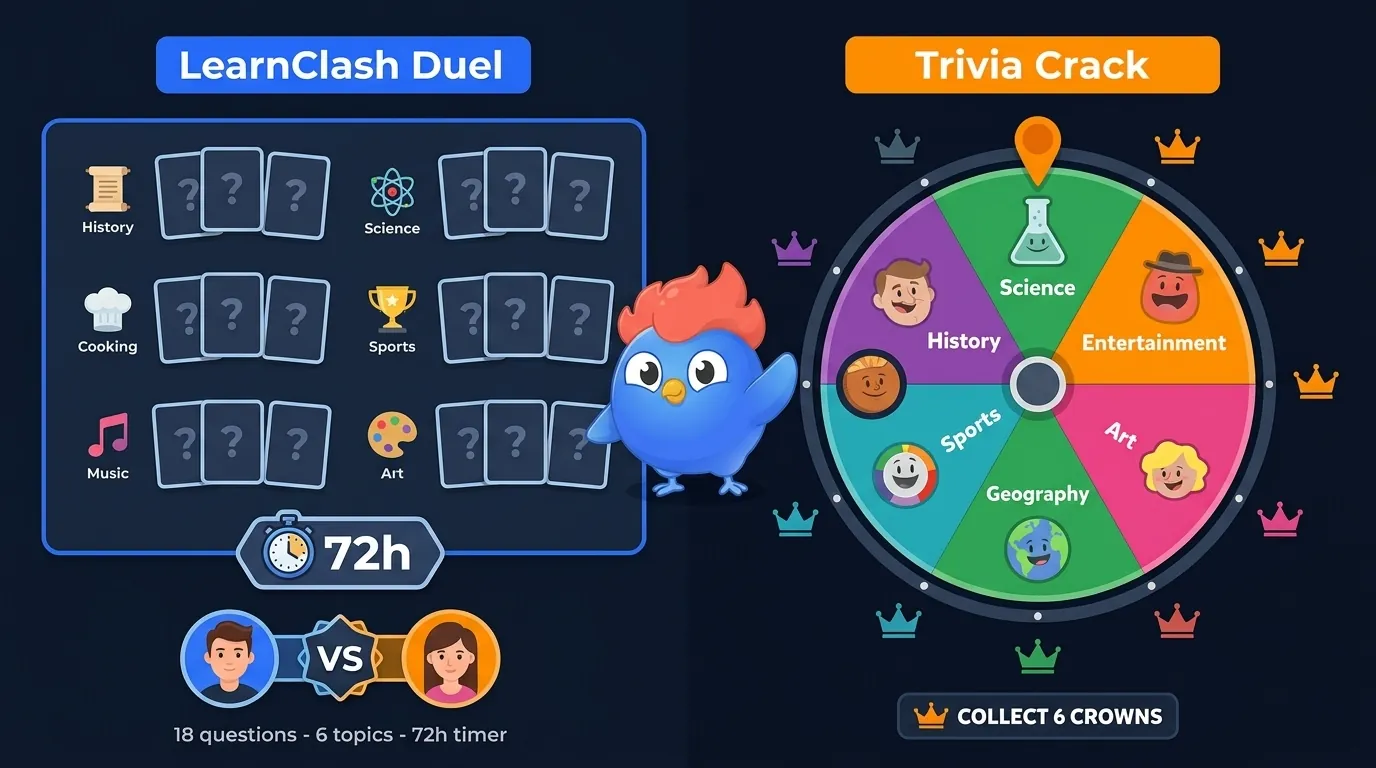
| Match detail | LearnClash | Trivia Crack Classic |
|---|---|---|
| Structure | Six rounds, three questions each | Wheel selects a category |
| Topic choice | Dealt choices, or one locked topic | Six Classic categories |
| Timing | Ordinary turns allow 72 hours; live by mutual invitation | Turn-based Classic play |
| Goal | Finish the duel with the higher score | Collect the category characters/crowns |
LearnClash’s live option uses the same duel and question rules. It starts when one player invites the other and they join. An ordinary friend link or rematch does not start live play by itself. You can still choose turn-based play when your schedules do not line up.
The wheel adds chance to which subject comes next. It does not make knowledge irrelevant: you still need correct answers. Choose the format you enjoy rather than treating one lucky category as proof that an entire match lacks skill. For a focused challenge, a single-topic geography duel avoids mixing subjects.
Ranking: ELO Ratings vs Crown Collection
LearnClash gives new players 1300 ELO in Gold II. The eight tiers run from Iron through Bronze, Silver, Gold, Platinum, Emerald and Diamond to Phoenix at 2400+. Your first games help find your level. It is a record, not a diploma. Over a series of rated duels, your results can help find closer opponents, but a number earned across mixed topics cannot certify that you know the same amount about art, sport and every branch of science you might face in the next round.
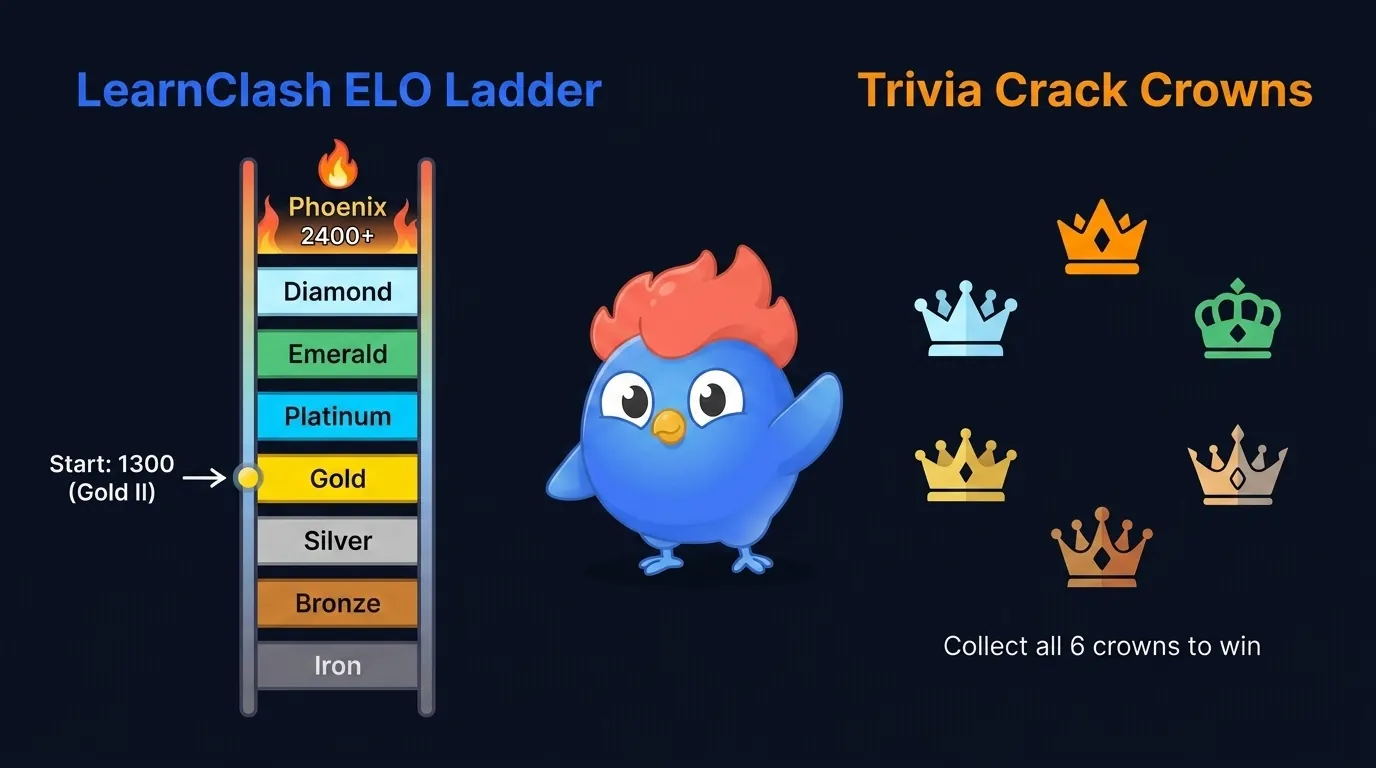
The old claim that Trivia Crack has no rankings was wrong. Etermax’s Topics guide describes weekly ranking points and a ranking for each category. Those points reward activity and correct answers. The guide does not establish an ELO-style opponent rating.
| Ranking question | LearnClash | Trivia Crack |
|---|---|---|
| What persists? | ELO across rated duels | Weekly and category ranking progress |
| What wins Classic? | Not applicable | Collecting the category characters/crowns |
| Comparable skill-rating formula? | ELO is the public rating | Not verified from the sources reviewed |
That distinction matters if you want a long-term skill ladder. It matters less if your aim is to beat a friend tonight or climb a weekly points board. Our ELO explanation covers what a rating can and cannot tell you.
Learning Value: Spaced Repetition and Quiz Practice
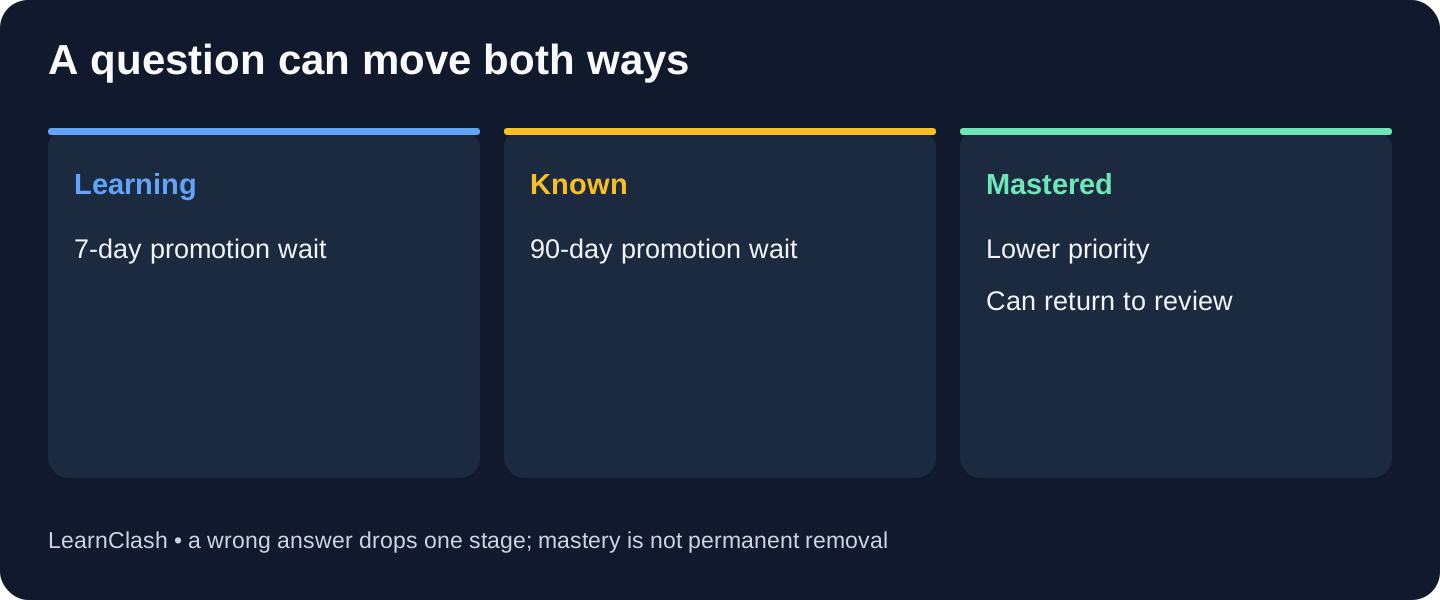
LearnClash tracks questions across Learning, Known and Mastered stages. The promotion waits are seven days and 90 days. When a question joins the review system through a duel or a Solo session, what matters next is how you answer when it returns, with a miss dropping it one stage instead of wiping out all prior progress or sending every other question back to the start. Mastered questions are lower priority, but can return when there is nothing fresh or due.
| Learning feature | LearnClash | Trivia Crack |
|---|---|---|
| Answering from memory | Duels and Solo | Quiz modes and Episodes |
| Scheduled review | Three-stage cycle | Not documented in reviewed sources |
| Weak-spot practice | Seen-question Solo review | Comparable workflow not verified |
| Follow-up explanation | Clash Chat | Comparable in-game tutor not verified |
It would be unfair to say that Trivia Crack offers no learning value. Answering a question is retrieval practice, and themed quizzes can help you work on a subject. The narrower distinction is whether the app schedules later review around what you have already answered. The reviewed Etermax pages do not describe that system.
Nor does a review schedule guarantee permanent recall. LearnClash supplies the practice loop; how often you return and how carefully you think still matter. The testing effect explains why retrieving an answer can help, while our spaced-repetition interval guide explains the LearnClash cycle. Neither establishes a measured retention advantage over Trivia Crack.
Pricing and Ads: Compare the Actual Plans
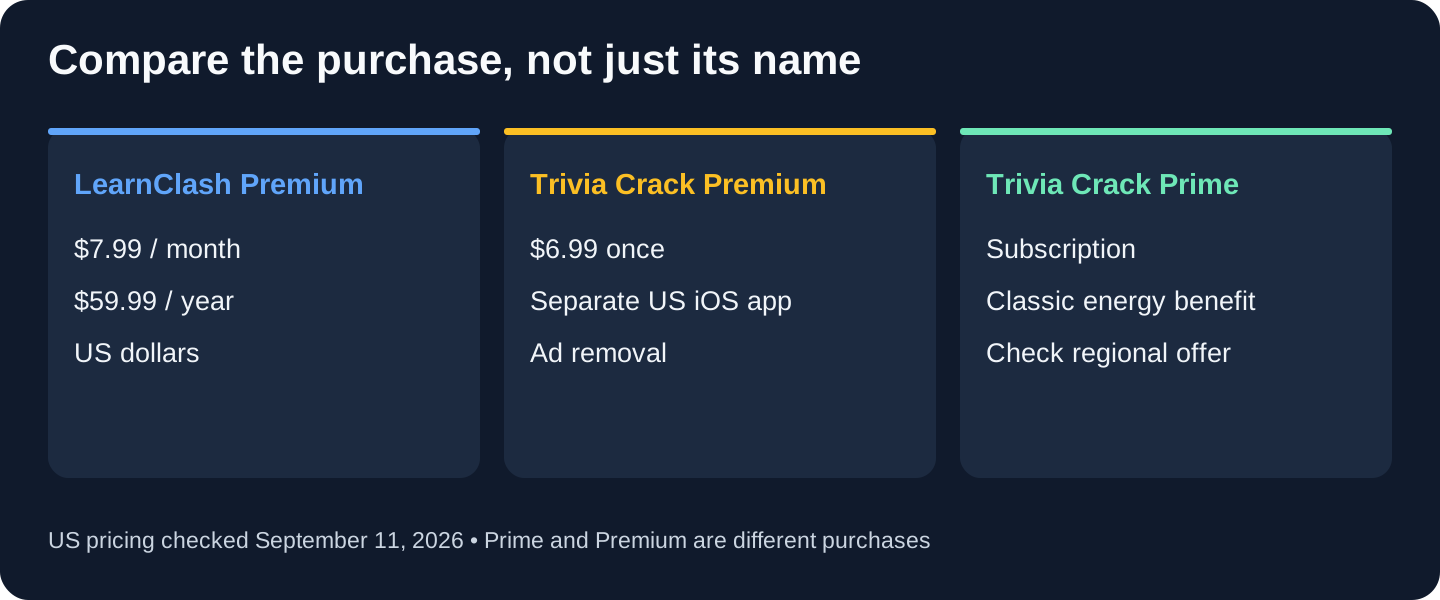
LearnClash shows no ads on either tier. Daily duels, ELO and spaced repetition are free. Premium costs $7.99 a month or $59.99 a year in US dollars, with a seven-day trial on the annual plan. The pricing page describes the upgrade and current limits.
Free Solo includes an initial starter allowance, then one session per local calendar day. Free Clash Chat starts with 30 introductory messages, then one per day. Free accounts hold one streak freeze; Premium holds three. Premium adds unlimited Solo subject to fair use, more chat, deeper stats, cosmetics and the fourth selectable topic card.
| Plan | Price or offer checked | What to distinguish |
|---|---|---|
| LearnClash free | $0 | Ad-free play; Solo and chat allowances |
| LearnClash Premium | $7.99/month or $59.99/year | Learning and customization features |
| Trivia Crack free | Free with in-app purchases | Advertising and mode-specific resources |
| Trivia Crack Premium | $6.99, separate US iOS app | One-time ad removal; in-app purchases remain listed |
| Trivia Crack Prime | Subscription; check the current regional offer | Unlimited Classic energy and other benefits |
Both LearnClash tiers share the collection rules: up to 500 saved topics, 30 additions per rolling 24 hours and 10 brand-new topic creations per rolling 24 hours. Both tiers share those limits. If you plan to save a large collection or create many new topics for a group in one sitting, check those rolling windows before you begin, because upgrading to Premium does not give you a larger topic budget or change when each rolling window makes room again.
For Trivia Crack, a one-time app price and a subscription are different purchases. Etermax’s paid-options guide says Premium removes ads in a separate app; Prime adds further benefits. Do not assume one purchase includes the other. This review does not establish your renewal price from a list of store purchase names.
Trivia Crack Premium 2026: What Energy Actually Limits
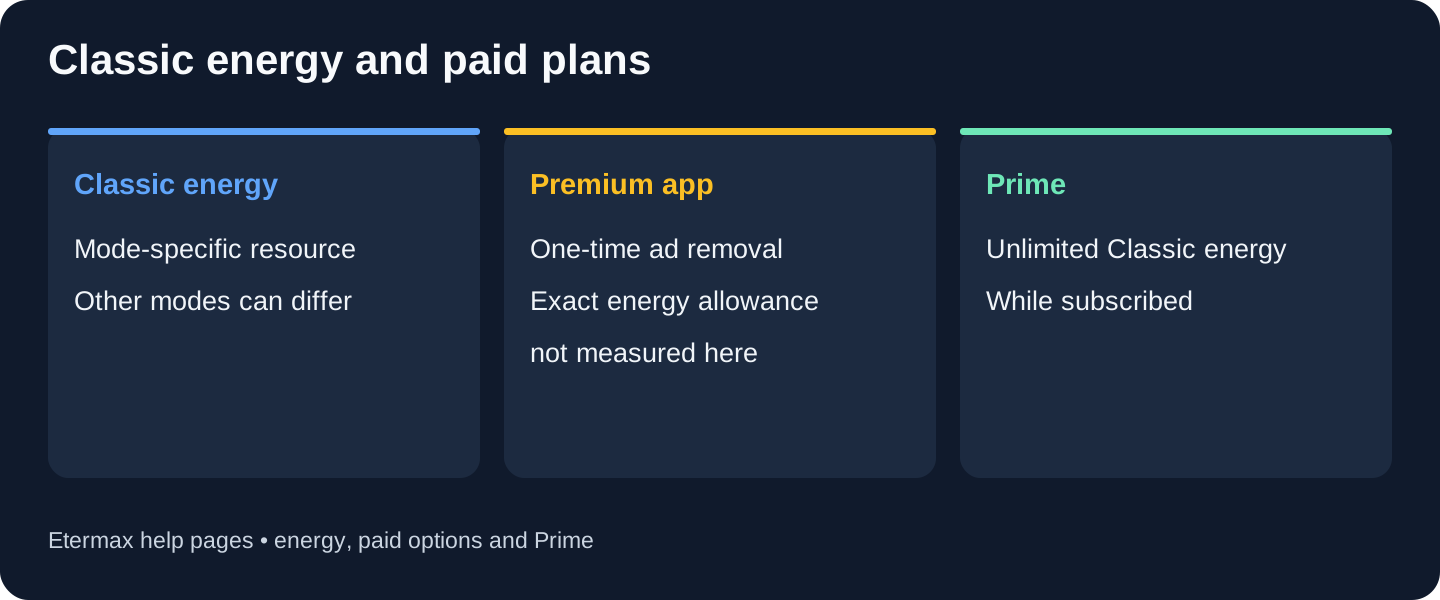
Trivia Crack’s energy guide describes an energy cost for Classic turns, with recharge and refill options. The scope is Classic. If you spend most of your time in another mode, do not assume that its entry cost, refill rules or rewards match Classic just because both sit inside the same app or use a paid account.
| Energy question | Documented answer |
|---|---|
| Does every mode use the same resource? | No; Etermax describes Classic as the main energy mode |
| Does Prime remove the Classic energy restriction? | Yes, while the subscription is active |
| Is the one-time Premium app the same purchase? | No, it is a separate paid app |
| Did this review measure Premium’s current starting energy? | No |
That last row is important. A store listing with coin or credit packs does not prove the exact play limit a paid customer sees. The earlier version of this article leaned too hard on a third-party sentiment summary and treated it as a reason to avoid Premium outright. The primary documentation supports a clearer plan distinction, not that blanket verdict.
The Prime guide also qualifies ad removal: optional rewarded ads may still be available. Check the purchase screen and the mode you actually use. A low one-time price can be useful for ad removal, but it is not a promise that every later benefit is included.
Beyond Mobile: Trivia Crack’s 2024-2026 Pivots
Trivia Crack has expanded beyond the original mobile wheel, including Trivia Crack World in VR and creator tools. They are separate products. When a brand has a phone game, a VR title and tools for quiz creators, a feature from one of those experiences cannot safely be assigned to all the others without checking the exact product you plan to use.
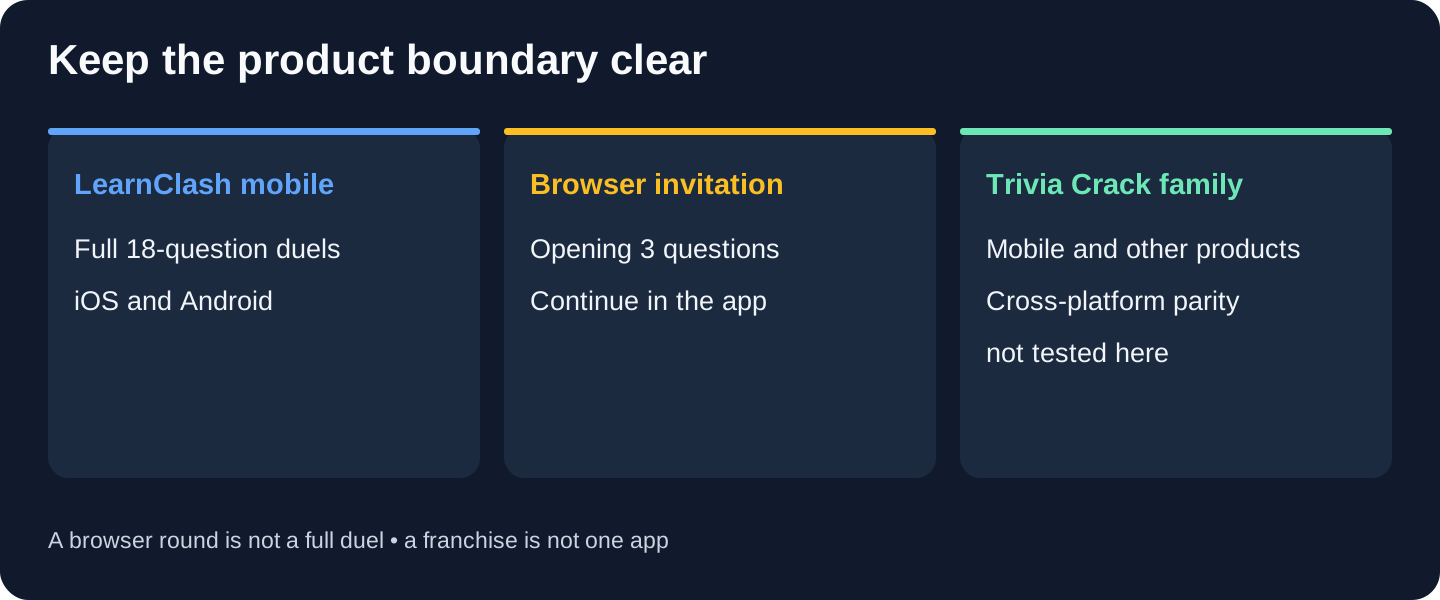
| Product question | What this comparison establishes |
|---|---|
| Is the Classic wheel still relevant? | Yes, as one format within Trivia Crack |
| Has mobile quiz creation changed? | Current listings describe AI creation and player-made Episodes |
| Does a franchise download total count current mobile players? | No |
| Have we tested feature parity across mobile, web and VR? | No |
For someone choosing a phone app, the current phone features matter most. A franchise timeline can explain the brand, but cannot stand in for a comparison of the modes on your screen. That is why the verdict here uses the released mobile features and the documented paid plans.
LearnClash is available on iOS and Android. A shared challenge link also lets a recipient answer the opening round in a browser before installing. That browser round is three questions, not the full 18-question duel. The completed duel and its rated result belong in the app.
AI Strategy: Question Creation and Answer Help
Both apps now use AI inside their quiz experience. LearnClash generates questions and provides Clash Chat for follow-up discussion. Trivia Crack’s current free and Premium listings both describe AI-powered creation. The label is not the benefit. If your goal is to make a quiz for friends rather than ask for help with a missed answer, the tool that lets you write, arrange and share questions may matter more than a tutor chat.
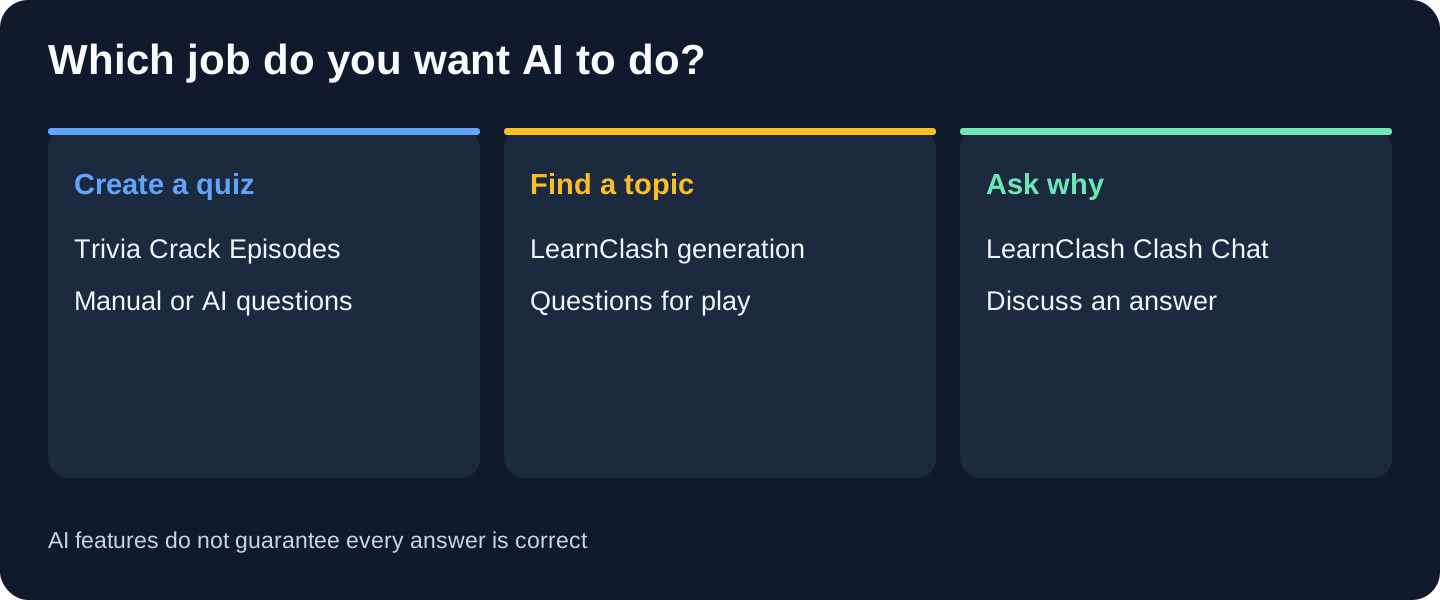
| AI task | LearnClash | Trivia Crack |
|---|---|---|
| Generate questions | Yes | AI-assisted Episodes described |
| Build a quiz to share | Share a challenge on a chosen topic | Create and publish your own Episodes |
| Discuss an answer | Clash Chat | Equivalent in-game tutor not verified |
| Guarantee every answer is right | No | No guarantee established by this review |
For example, a quiz creator may want to write questions for a group and publish the set. A player who has just missed a question may instead want to ask why an answer is right. Those are different needs, and the existence of AI does not settle which app meets yours.
LearnClash’s automated checks reduce errors, but you should still question an answer that seems wrong. AI can produce plausible mistakes. The same standard belongs in a comparison of either app: inspect the explanation and its source rather than accepting the label as a quality score.
Daily Engagement: Quests, Streaks, and AI Tutor
LearnClash has daily quests, cooperative friend quests and streak protection. Daily Clash adds a shared six-question challenge, while clearly labeled AI rivals provide another way to practice. Rival matches do not change your ELO. These released features sit alongside ordinary friend duels and Solo.
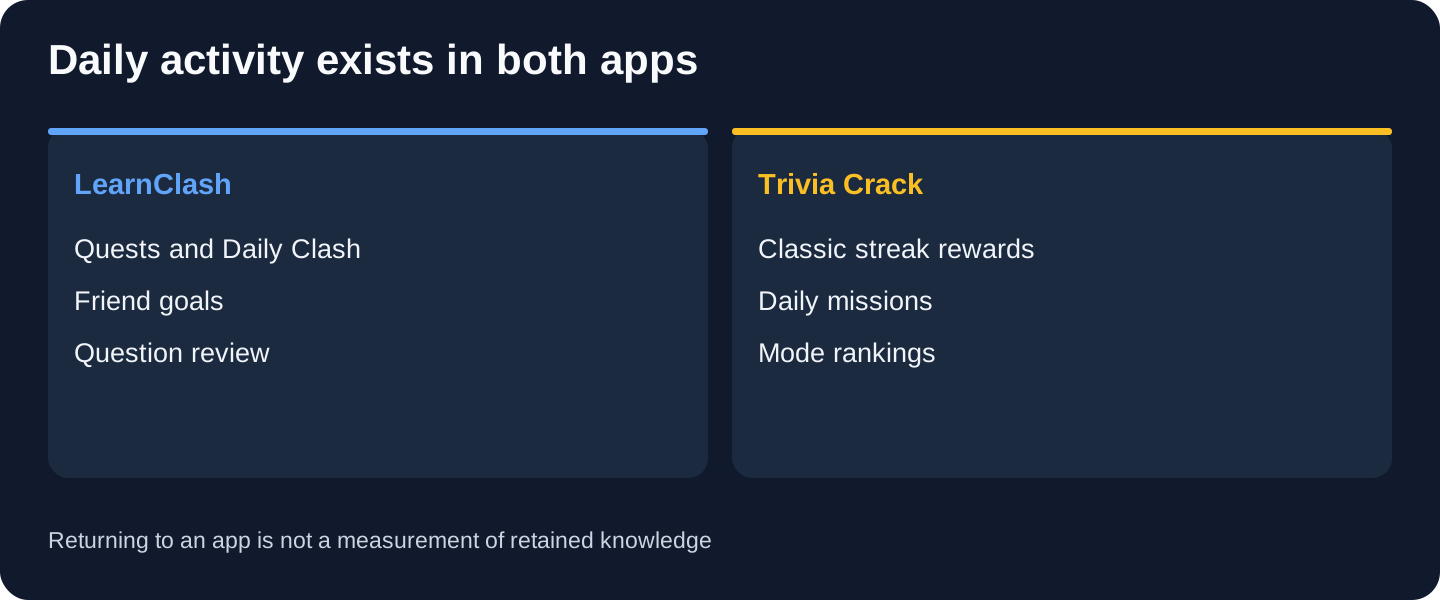
Trivia Crack also has daily activity tools. Its Streaks guide describes rewards for regular Classic turns and daily missions behind the flame icon. The older claim that it only offers weekly challenges was inaccurate.
| Return habit | LearnClash | Trivia Crack |
|---|---|---|
| Daily activity | Quests and Daily Clash | Classic streak rewards and daily missions |
| With a friend | Duels, pair streaks and cooperative quests | Friend matches and shared Episodes |
| Progress to revisit | Topic review and ELO | Mode rewards and rankings |
Choose goals you enjoy. A streak can be a reason to open an app, but if you keep it alive by racing through questions you never revisit or think about, the count alone cannot tell you how much of that week’s play has stayed with you. You can just play with a friend.
What Reviewers Say: LearnClash and Trivia Crack
A source comparison should include criticism of our own app. The Spieleratgeber-NRW review from July 15, 2026 highlights the topic generation, answer explanations and Solo practice. It also criticizes errors in German AI questions and subscription prompts, and does not recommend it as a classical learning app.
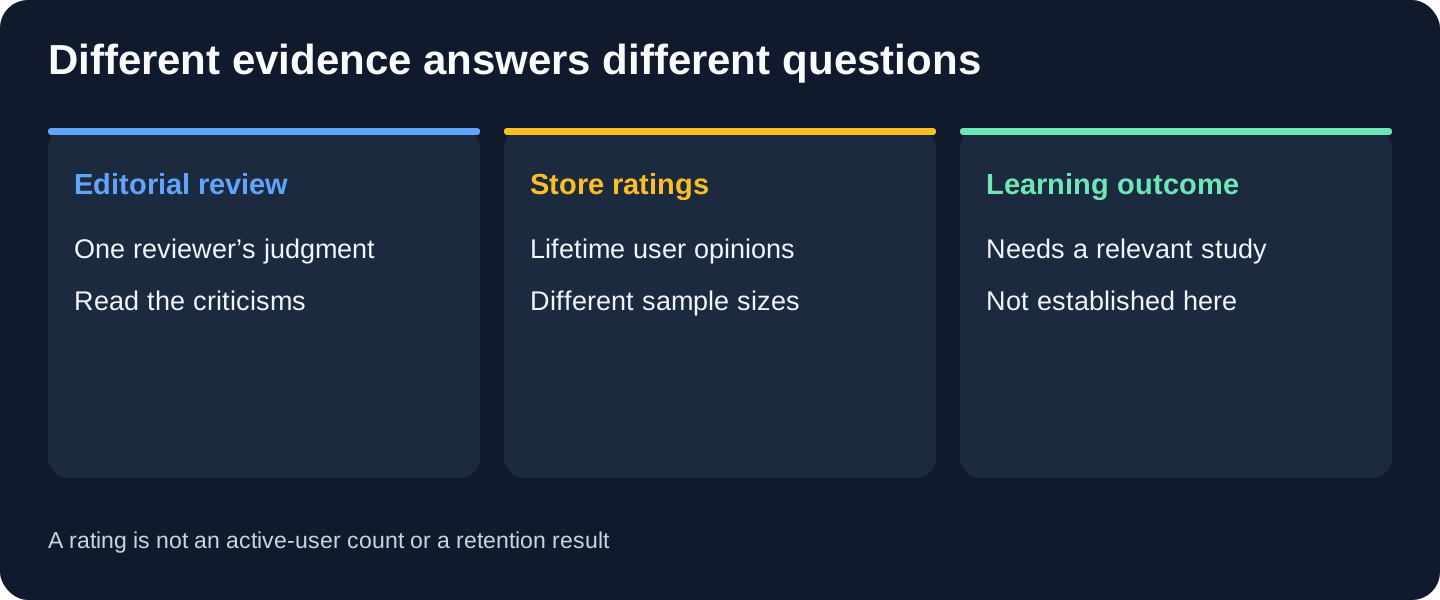
The Educational App Store review is more positive, with a July 2026 rating of 5.0/5 and certification, but a reader choosing a study tool should weigh that praise alongside the German review’s specific concerns about wrong questions and subscription prompts. Neither is a controlled study.
For Trivia Crack, the US iOS listings checked September 11 show 4.6 from about 748K ratings for the free app and 4.7 from about 101K for Premium. Those large lifetime rating pools show broad use and opinion. They do not measure active players, current ad frequency or learning outcomes, and they should not be compared with a young app’s small sample as though both had equal evidence.
Who Should Choose LearnClash?
LearnClash fits someone who wants repeated quiz practice and a lasting ELO ladder, with no ad breaks. You can focus on one topic with a friend, play a mixed duel, and return to questions through Solo. That loop is the reason to try it. If you like the small contest with a friend but also want the question you missed today to come back when you have had time to forget it, the review system gives that match a useful next step.
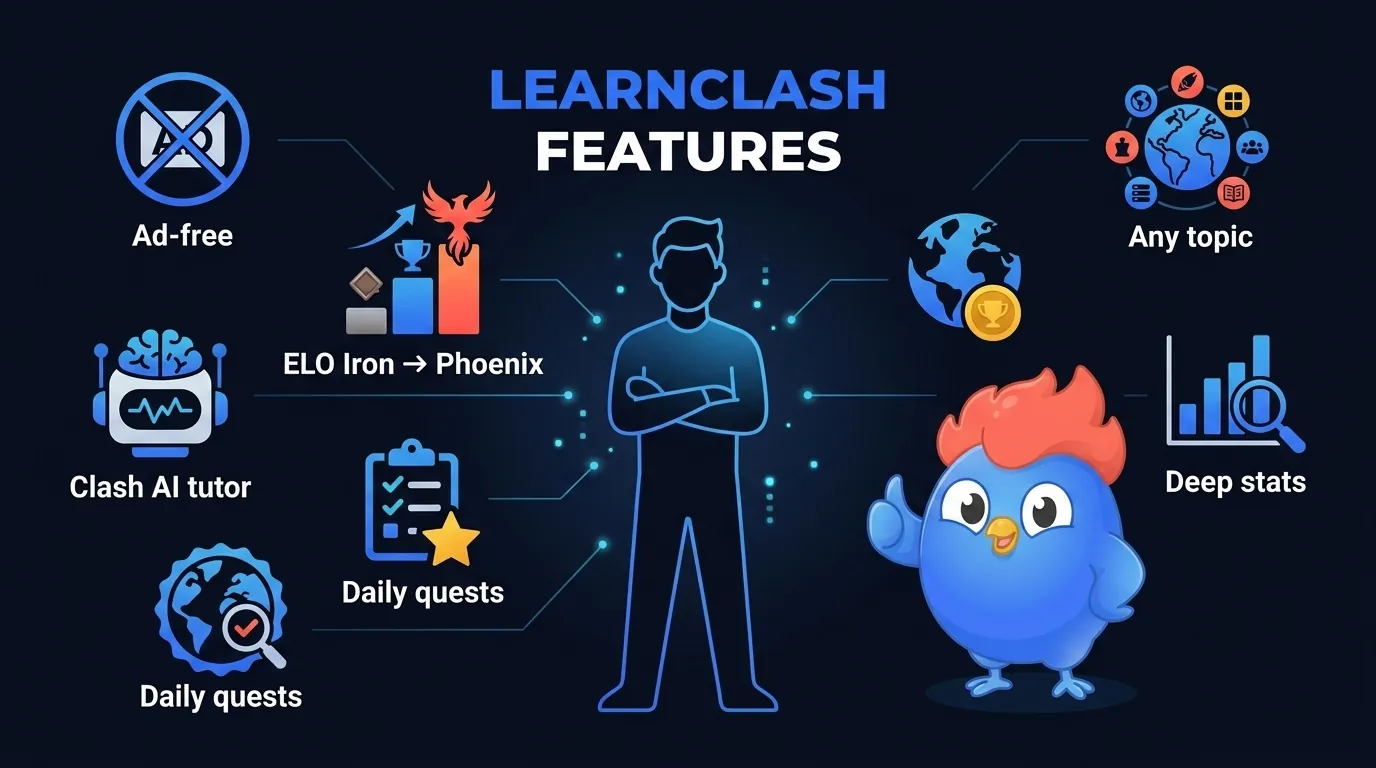
LearnClash is a good fit if you:
- Want ELO-ranked quiz duels with friends.
- Want later review of questions you have already seen.
- Prefer an ad-free experience on the free tier.
- Want to discuss an answer with Clash Chat.
Its limits matter too. Free Solo and chat are metered, questions can contain errors, and play requires a connection. It is not an offline flashcard deck or a substitute for a checked course textbook. Try the actual flow before paying for more sessions.
Who Should Choose Trivia Crack?
Trivia Crack fits someone who enjoys the familiar wheel, wants to play with friends already using it, or wants to create themed Episodes. Its extra modes and rankings give it more range than a six-category summary suggests. That is a fair reason to choose it. If the people you want to play with are already there, and your ideal evening is a few wheel spins followed by a quiz one of them made, switching apps may add work without improving the part you enjoy.
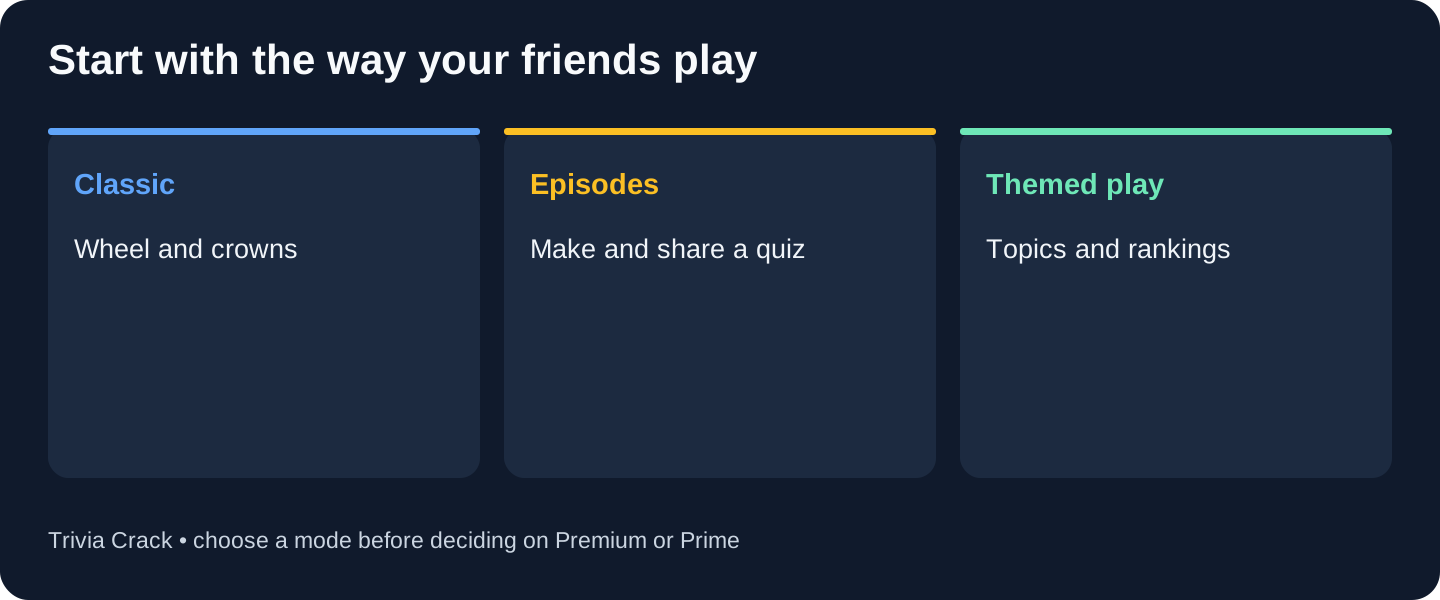
Trivia Crack is a good fit if you:
- Enjoy Classic wheel-and-crown matches.
- Want to make and share quiz Episodes.
- Like themed categories and weekly ranking goals.
- Value playing with friends already on the service.
Check your preferred mode before deciding on a paid plan. Premium’s one-time ad removal may suit one person, while Prime’s ongoing Classic energy benefit may suit another. A scheduled review cycle remains unverified in the sources used here, so look carefully if that is your main requirement.
The Bottom Line
LearnClash combines ELO competition with question review and an answer tutor. Trivia Crack combines its Classic wheel with themed play and quiz creation. Both have solo options and subjects beyond a fixed list. Start with one round. When both apps can offer a topic you like, a solo option and a way to challenge a friend, the useful comparison is what happens after you play: the next match, the answer discussion, the review or the quiz you create yourself.
Try a round, miss a question, and look at what each app offers next. Can you discuss the answer? Can you return to it later? Do the topic choices suit your friends? Does the free allowance cover how often you play? Those questions are more useful than a feature count or a slogan about which app makes you smarter.
How we test
We use the tools we compare. That means installing the mobile apps on real iOS and Android devices, hosting test sessions in the browser tools, and joining from a second device as a participant, because free-tier limits usually show up on the join screen, not the marketing page.
Every number is dated. Prices, player caps, and plan names come from each vendor's own public pricing page or help center, read in a normal browser and recorded with the date we read them. When a claim cannot be re-verified on the vendor's site, we either date it to the last check that confirmed it or cut it. Quotes are verbatim from the cited page or they are not quotes. The last full re-check of every vendor claim on this page ran on September 11, 2026.
First-party data carries its export date. When we cite usage numbers from LearnClash itself, such as answer rates on specific questions, they come from dated production-database exports, and we put the export date and sample size next to the number.
Nobody pays to be here. No vendor has paid for placement or ranking in our comparisons, none sees a draft before publication, and there are no affiliate links in them. If that ever changes, this box will say so.
LearnClash is our own product. These comparisons are written by the person who builds it, which is a bias you should know about. We handle it in the open: our app is always labeled as ours, we do not stage tests designed to crown it, and every comparison names the situations where a competitor is the better pick. Read our app's entry as a founder's pitch with checkable numbers, and the rest as the dated re-checks they are.
Frequently asked questions
Is LearnClash better than Trivia Crack for learning?
LearnClash is designed around spaced repetition, ELO duels and answer discussions with Clash Chat. Trivia Crack also provides quiz practice, themed content and AI creation. The documentation we reviewed does not describe a comparable scheduled-review system for Trivia Crack; that does not mean you cannot learn from it.
Is Trivia Crack limited to six topics?
No. Its Classic wheel has six categories, but Topics includes themed categories and Episodes lets players create quizzes, including with AI. LearnClash lets you search a topic and use it in duels and Solo review.
Is LearnClash free to play?
Yes. Daily duels, ELO ranking and spaced repetition are free with no ads. Solo includes a starter allowance and one free session per local calendar day. Premium is $7.99/month or $59.99/year in US dollars, with a seven-day trial on the annual plan. Both tiers share the current collection and topic-creation limits.
Can you play either app on your own?
Yes. LearnClash Solo offers short review sessions, including weak-spot practice. Both Trivia Crack US iOS listings describe playing on your own as well as with friends. These are different solo experiences; the existence of solo play alone does not establish scheduled spaced repetition.
What is the difference between Trivia Crack Premium and Prime?
Premium is a separate app with a one-time purchase that removes ads; the US iOS listing was $6.99 on September 11, 2026. Prime is a subscription with unlimited energy in Classic mode and other benefits. Optional rewarded ads may remain with Prime. Check the offer shown in your region before paying.